

13 MVP Development Strategies for SaaS Founders

MVP development strategies focus on one clear objective: validate a product idea quickly and cheaply while extracting the maximum amount of actionable learning.
For SaaS founders, that means launching something simple that proves demand, discovers pricing and retention levers, and creates a repeatable growth pathway—without building every feature on the roadmap.
Why an MVP Matters for SaaS
SaaS businesses live and die by recurring revenue and retention. For a founder, the biggest risks are building features customers don't want, mispricing the product, and underestimating churn. An effective MVP reduces those risks by turning guesses into data.
At its best, an MVP answers three vital questions fast:
- Is there a real, addressable customer who will pay? (demand)
- Which core problem matters enough to justify buying and sticking with the product? (value)
- What minimal experience will produce activation and early retention? (growth)
For companies like CKI inc—both incubating SaaS startups and scaling existing SaaS businesses—solid MVP development strategies tie product validation to early customer success routines. That connection turns trial users into stickier customers and surfaces retention issues before they become business problems.
Core Principles of Successful MVP Development Strategies
Every sensible approach to an MVP is rooted in a few common principles. These keep teams focused on learning, not just building:
- Start with a testable hypothesis. An MVP should validate a specific assumption: a target customer will perform a measurable action (sign up, invite teammates, upgrade) in response to the product offering.
- Measure the signal that matters. Track the metric tied to the hypothesis (activation rate, conversion to paid, retention after 30 days) rather than vanity metrics.
- Deliver the minimum experience that yields feedback. The “minimum” is the smallest scope that still produces a reliable answer to the hypothesis.
- Design for learning loops. Instrument analytics, gather qualitative feedback, iterate quickly.
- Keep customer success involved from day one. Early support conversations reveal pain points and reduce churn from the first users.
Choosing the Right MVP Type
MVPs take many forms. Picking the right one depends on the hypothesis, budget, time, and the required fidelity of user experience. Below are common MVP formats with real-world guidance on when to use each.
Landing Page MVP
Build a convincing landing page that explains the product, value proposition, and pricing. Drive traffic via paid ads or organic channels to measure interest (sign-ups, pre-orders, signups for early access).
Use when:
- Validating demand or pricing before building back-end functionality.
- Testing messaging and value propositions cheaply.
Pros: Fast, cheap, quantifiable. Cons: Doesn’t test product usage or retention.
Concierge MVP
Offer the service manually behind the scenes while presenting an automated product to users. The founder or team performs the tasks initially, creating a high-touch experience that uncovers deep insight into workflows.
Use when:
- The core value is complex or involves human judgment.
- Founders want to learn workflows before automating them.
Pros: Deep qualitative feedback, high conversion potential. Cons: Not scalable long-term.
Wizard of Oz MVP
The product appears automated, but key features are manually operated. Compared to a concierge MVP, the user interacts with a UI that hides the manual processes.
Use when:
- Visual/product polish influences user perception, but automation can be deferred.
Pros: Tests UI and UX with lower initial engineering cost. Cons: Operational overhead and potential for unmet expectations if revealed too early.
Prototype / Clickable Mockup
Interactive designs (Figma, InVision) that simulate workflows without backend functionality. Useful for usability testing and stakeholder alignment.
Use when:
- Validating flows and onboarding UX before engineering begins.
Pros: Quick validation of usability, reduces wasted engineering. Cons: Doesn’t test real behavior with data or billing.
Single-Feature MVP (Micro-SaaS)
Launch a product that solves one narrowly defined pain very well—think a focused analytics dashboard, a specialized CRM integration, or a single automation rule.
Use when:
- There’s a clear, narrow use case with high perceived value.
Pros: Easier to build, easier to market. Cons: Can limit perceived product scope and future positioning.
No-Code / Low-Code MVP
Assemble workflows using tools like Bubble, Webflow, Airtable, Zapier, or Glide. This lowers engineering barriers and speeds experimentation.
Use when:
- Speed matters and the MVP doesn’t require heavy backend logic or high performance.
Pros: Rapid launch, low cost. Cons: Potential scaling constraints and technical debt if not planned for migration.
Prioritization Frameworks for MVP Feature Selection
Founders often have too many ideas and too little time. Using a prioritization framework helps keep focus on what's most likely to validate the business.
RICE (Reach, Impact, Confidence, Effort)
Score features based on:
- Reach — How many customers will this affect?
- Impact — How much will it move the needle on the key metric?
- Confidence — How certain is the team about estimates?
- Effort — Engineering time required.
High RICE score items are the best bets for an MVP.
MoSCoW (Must, Should, Could, Won't)
Group features by necessity. For an MVP, only include the Must items; everything else belongs on the roadmap.
Kano Model
Classify features as basic, performance, or delighters. For an MVP, focus on basics and one performance feature to differentiate.
Opportunity Solution Tree
This visual model links user problems to solutions and experiments. It helps teams align on the hypothesis and the metrics to measure success.
Designing an MVP UX That Converts and Retains
For SaaS, onboarding and activation are just as important as initial sign-up. A polished but minimal onboarding path dramatically increases early activation and retention.
- First-run experience: guide users to the “Aha!” moment within minutes. Remove friction — use sample data, quick-start templates, or guided tours.
- Progressive disclosure: show core functionality first and reveal advanced features later to avoid overwhelming users.
- Instrument events: track each step of onboarding with a consistent event taxonomy so behavior can be analyzed and optimized.
- Microcopy matters: small, contextual instructions and error messages reduce drop-off.
// Example event names
event: "signup_completed"
event: "billing_info_added"
event: "project_created"
event: "first_key_action_completed"
Technical MVP Strategies: Build Fast, Keep Options Open
Engineering choices for an MVP should prioritize speed but leave a migration path for scale. Technical debt is acceptable if it's deliberate and bounded.
Tech Stack Choices
Common approaches for SaaS MVP stacks:
- Frontend: React, Vue, or even static sites with server-rendered pages for speed.
- Backend: Node.js/Express, Ruby on Rails, Django, or serverless functions (AWS Lambda, Vercel). Rails and Django remain popular for rapid MVPs due to batteries-included conventions.
- Database: PostgreSQL for relational data; Firebase or DynamoDB for serverless needs.
- Auth & Payments: Auth0, Clerk, Firebase Auth; Stripe for payments and billing.
- Hosting / Infra: Managed PaaS (Heroku, Render), serverless (Vercel, Netlify), or cloud providers (AWS/GCP) for more control.
Design with modularity: keep user-facing UI and core business logic separate, use APIs, and avoid deep coupling to third-party UIs or proprietary pipelines that are hard to replace.
Development Tactics
- Feature flags: Launch features behind flags to test, roll back, and gradually expose capabilities.
- CI/CD pipelines: Automate deployments even for early-stage projects—faster iteration beats manual processes.
- Monitoring & observability: Add basic logging, error tracking (Sentry), and performance monitoring from day one.
- Security & compliance: Apply basic security hygiene; if handling payments or personal data, ensure PCI and privacy basics are covered.
Key Metrics and How To Use Them
Metrics should map back to the hypothesis. For SaaS MVPs, focus on a handful of metrics that indicate real value and the potential for sustainable revenue.
Activation and Engagement
- Activation rate: percent of signups completing first meaningful action.
- Time to first value: time from signup to the "Aha!" moment.
- DAU/MAU or stickiness: how often users return.
Monetization
- Conversion to paid: percent of active users who pay.
- MRR/ARR: monthly or annual recurring revenue to track early revenue momentum.
- Average revenue per account (ARPA): helps evaluate pricing and upsell potential.
Retention & Churn
- Churn rate: number of customers lost in a period; watch cohort churn rather than aggregate churn to spot trends.
- Customer lifetime value (CLTV): projected revenue per customer, used against CAC to evaluate unit economics.
Acquisition Efficiency
- Customer acquisition cost (CAC): keep an eye on how much it costs to acquire paying users during the MVP phase.
Early-stage SaaS teams should track cohorts, instrument dashboards (Amplitude, Mixpanel, PostHog), and tie analytics events to specific experiments and feature flags.
Customer Discovery and Validation Techniques
Data is powerful, but qualitative feedback directs interpretation. Effective MVP development strategies combine both.
- Structured interviews: one-on-one sessions with target users, asking about workflows, pain points, and alternatives.
- Pain-quantifying surveys: ask how much time or money the problem costs them—this helps frame pricing.
- Pilot programs: offer early customers discounted access in exchange for feedback and close collaboration.
- Usability testing: watch users interact with prototypes or early builds to see where they struggle.
- Pricing experiments: test different price points or packaging (per seat vs per usage) via landing pages or A/B tests to validate willingness to pay.
Integrating Customer Success and Support Early
Customer success shouldn’t be an afterthought. Embedding CS into the MVP phase yields two major benefits: better product insight and lower early churn.
- High-touch onboarding: For initial cohorts, offer guided setup sessions or dedicated success reps. This uncovers friction and creates evangelists.
- Feedback loops: Route support tickets and conversations directly to product decisions. Prioritize fixes or features by impact on retention.
- Success metrics: Track time-to-value and onboarding completion as CS KPIs tied to activation and retention.
CKI inc’s approach to incubation emphasizes exactly this: pairing early product experiments with hands-on customer success so startups learn faster about retention levers and pricing sensitivities.
Growth Tactics During the MVP Phase
Growth doesn’t wait for a “full product.” Early experiments should explore sustainable channels and virality mechanisms that complement the product’s value.
- Content and SEO for long-term acquisition: Publish problem-focused content targeting keywords potential customers search for (how-to guides, troubleshooting common workflows).
- Partnerships and integrations: A simple integration with a popular tool can unlock a warm channel for users.
- Referral incentives: Offer credits or discounts for referring teammates—works well when product value scales with team adoption.
- Paid acquisition experiments: Run small-scale tests in paid channels and measure cohort LTV to CAC quickly.
When and How to Move Beyond the MVP
Knowing when to abandon the MVP model and scale is as important as knowing how to build it. Signs it’s time to expand include consistent positive cohort retention, predictable revenue growth, and validated unit economics (CLTV > CAC by a sustainable margin).
Next-phase tasks typically include:
- Refactoring for scale: move from quick solutions to maintainable architectures with better performance and security.
- Hiring: bring in product managers, engineers, and customer success staff to own repeatable processes.
- Formalizing processes: incident response, SLAs, documentation, and regulatory compliance if needed.
- Investing in productized onboarding and self-serve growth channels to lower CAC over time.
Common Pitfalls and How to Avoid Them
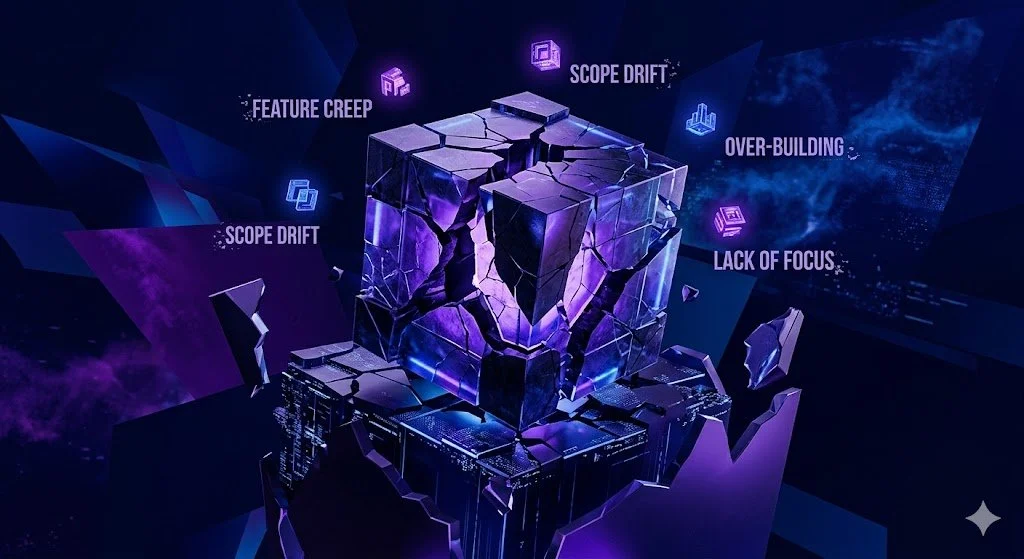
Many MVP projects fail not because the idea was bad, but because execution missed the mark. Common mistakes include:
- Overbuilding: adding nice-to-have features before the hypothesis is validated. Remedy: apply MoSCoW and RICE ruthlessly.
- Ignoring qualitative feedback: relying only on numeric metrics without hearing from users. Remedy: schedule interviews and support callbacks.
- Lack of measurement: launching without event instrumentation. Remedy: define events and funnels before launch.
- Skipping customer success: assuming users will figure things out. Remedy: include CS in early cohorts and use learnings to inform product changes.
- Premature scaling: investing heavily in infra or hiring before product-market fit. Remedy: scale incrementally once retention metrics stabilize.
Practical Example: A Composite SaaS MVP Journey
Consider a hypothetical startup from CKI inc’s incubator that aims to be a lightweight subscription analytics tool for small SaaS teams.
- Hypothesis: Small SaaS teams will pay $49/month for simple churn and cohort insights integrated with Stripe.
- MVP choice: Landing page with signup + concierge data ingestion. Early customers sign up and schedule a 30-minute setup call where the team ingests Stripe exports manually.
- Metrics tracked: signup-to-activation (completed setup), 14-day retention, conversion to paid after 7 days.
- Validation: After 60 signups and 20 paid conversions, interviews reveal the most-used report and a common request for an automated Stripe sync.
- Next step: Build Stripe sync as a high-RICE item, add feature flag exposure, and migrate manual processes to automation while keeping CS involved for the first 100 customers.
This sequence demonstrates how MVP development strategies can be pragmatic, iterative, and tightly coupled with revenue and retention goals.
Actionable MVP Launch Checklist for SaaS Founders
- Define a single testable hypothesis and the metric that proves it.
- Select the MVP type that best tests that hypothesis (landing page, concierge, prototype, etc.).
- Create a prioritized feature list using RICE or MoSCoW; keep the MVP lean.
- Design onboarding flows that lead users to the "Aha!" moment quickly.
- Instrument analytics events and funnels before launch.
- Plan customer discovery: schedule interviews and usability testing slots.
- Set up basic support & customer success processes for early adopters.
- Run early acquisition experiments and measure cohort behavior.
- Iterate rapidly based on combined quantitative and qualitative signals.
- Decide when to scale: validate retention, conversion, and LTV:CAC before expanding.
How an Incubator or Growth Partner Helps
Working with an experienced incubator or growth partner accelerates many parts of the MVP lifecycle. For founders who are building and scaling SaaS, support typically falls into three areas:
- Product and technical execution: architecture advice, rapid prototyping, and dev resources to build the MVP while maintaining a migration path for scale.
- Customer success and growth: frameworks for onboarding, experiments to reduce churn, and marketing channels that bring the right users.
- Business validation: pricing experiments, sales playbooks for pilots, and guidance on unit economics.
CKI inc offers these services in a hands-on way—pairing founders with engineers, growth strategists, and customer success experts who specialize in SaaS. That support helps early teams run faster experiments while maintaining focus on retention and revenue.
Conclusion
MVP development strategies are not a one-size-fits-all checklist. They’re a mindset: test assumptions, measure what matters, and iterate based on both data and direct customer conversations. For SaaS founders, the ultimate goal is not just to ship fast, but to discover a repeatable way to acquire and retain paying customers.
When executed well, an MVP does more than validate—it creates early revenue, informs pricing, surfaces retention levers, and builds the routines that scale. Partnering with experienced teams that blend product, engineering, and customer success—like those at CKI inc—can compress timelines and reduce costly missteps for founder-led startups.
Frequently Asked Questions
What is the single most important metric to track during an MVP?
There’s no universal answer, but the most important metric is the one that directly tests the MVP hypothesis. For most SaaS MVPs, that will be an activation or conversion metric—such as the percent of signups who perform the first meaningful action, or the percent of trial users who convert to paid within a set period.
How long should an MVP phase last?
It depends on the hypothesis and the feedback velocity. Many MVP experiments run for 4–12 weeks—long enough to collect meaningful cohort data and iterate, but short enough to avoid sunk-cost bias. If learning stalls, change the experiment rather than extend it indefinitely.
Is it okay to use no-code tools for an MVP?
Yes. No-code and low-code tools are excellent for rapid validation and user testing. The trade-off is potential technical debt and scaling constraints, so plan a migration path if the product proves successful.
When should a founder switch from a high-touch onboarding model to self-serve?
Switch when the product’s activation flows are stable and repeatable, and when manual onboarding no longer improves activation or retention meaningfully. Often this transition happens after validating the core workflows with early cohorts and automating the most common setup steps.
How does pricing fit into MVP development strategies?
Pricing should be part of the hypothesis. Test willingness to pay early through pre-orders, landing pages, or pilot discounts. Pricing experiments help avoid late-stage surprises and give early signals about the product’s commercial potential.
Get A Free 30-Minute Strategy Session
Fill out the questionnaire to receive a personalized growth plan based on your current stage, from startup to enterprise, through a free consulting session with one of our executives.
Get Started ➜Related Articles






Product-Led Growth isn't just a strategy for acquisition; it is the fundamental engine for lifecycle expansion. Founders who obsess over PLG beyond the initial sale understand a critical truth: your product itself must create and capture new value.