

The 5 Critical Steps for SaaS Product-Led Growth

Product-Led Growth (PLG) has fundamentally rewritten the playbook for software-as-a-service (SaaS) success.
By positioning the product as the primary engine for customer acquisition, retention, and expansion, forward-thinking SaaS founders are scaling businesses faster and more efficiently than ever before.
However, transitioning to a product-led motion is not merely a change in marketing tactics—it is a comprehensive architectural pivot that demands focus, rigorous data discipline, and an organizational commitment to user-centric value creation.
In modern SaaS, buyers no longer want to be “sold to” before they understand value. They want to experience value first, then decide whether to pay. PLG aligns directly with this behavior, making it one of the most powerful growth models in the industry.
But PLG is often misunderstood. Many companies assume that adding a free trial or self-serve signup makes them product-led. In reality, true PLG requires deep alignment between product design, data systems, onboarding, pricing, retention loops, and expansion logic.
This framework breaks down the 5 critical steps for SaaS Product-Led Growth, along with the systems required to make them work at scale.
The Philosophy of Product-Led Growth
At its core, PLG is the acknowledgment that in the modern digital economy, power has shifted from the vendor to the user.
Historically, SaaS companies relied on “sales-led” motions, where sales teams controlled access to product understanding. Users often purchased software they had never meaningfully used.
PLG flips this model:
- Users access the product immediately
- Value is experienced before payment
- Adoption drives conversion
- Product usage becomes the primary sales motion
In this system, the product is not just a tool—it is the primary growth engine.
Why Product-Led Growth Matters Now
The SaaS landscape has fundamentally changed:
- CAC is rising across paid channels
- Buyers are more skeptical of sales messaging
- Self-serve expectations are standard
- Switching costs are lower in many categories
- Product comparison is instant and transparent
PLG addresses these shifts by removing friction from the buying process and shifting persuasion into product experience.
Companies that successfully implement PLG typically see:
- higher conversion rates
- lower acquisition costs
- improved retention
- increased expansion revenue
- stronger product-market fit signals
The 5 Critical Steps for SaaS Product-Led Growth
1. Optimize for Rapid Time-to-Value (TTV)
Time-to-Value (TTV) is the most important metric in any PLG system. It represents the time between signup and the moment a user experiences meaningful product value—the “aha” moment.
If users do not reach value quickly, nothing else matters.
Understanding the “Aha Moment”
Every SaaS product has a specific moment where users understand its value.
Examples:
- Slack → first meaningful team conversation
- Notion → first structured workspace created
- Stripe → first successful payment processed
- Zapier → first automation runs successfully
- Analytics tools → first insight discovered
If this moment is unclear, your PLG system is fundamentally broken.
Reducing Friction in Onboarding
Most onboarding systems fail because they:
- ask too much upfront
- force unnecessary setup steps
- delay product interaction
- overwhelm users with options
To improve TTV:
- remove unnecessary form fields
- allow immediate product exploration
- delay advanced configuration
- provide templates or sample data
- guide users to a single core action
The goal is not explanation. The goal is first value fast.
Minimum Viable Onboarding (MVO)
Minimum Viable Onboarding means identifying the smallest possible path to value.
Ask:
What is the absolute minimum action required for a user to experience the product’s core benefit?
Then remove everything else that does not support that outcome.
Measuring TTV Properly
To optimize TTV, you must measure it accurately:
- time from signup → first core action
- time from signup → first success event
- drop-off rate at each onboarding step
- correlation between early actions and retention
High-performing PLG companies constantly refine this funnel.
Tactical Improvements
- progressive onboarding (unlock steps gradually)
- contextual tooltips instead of tours
- instant templates
- “start here” workflows
- embedded sample data
- guided first success flows
Every reduction in friction compounds growth.
2. Implement Data-Driven Segmentation
One-size-fits-all onboarding destroys PLG performance. Users behave differently, and your product must adapt to those behaviors.
Behavioral Segmentation vs Demographic Segmentation
Traditional SaaS segmentation relies on:
- company size
- industry
- job title
But PLG relies on behavioral data:
- feature usage
- frequency of engagement
- depth of workflow usage
- collaboration behavior
- activation status
Behavior reveals intent. Demographics do not.
Core Behavioral Segments
Most SaaS products naturally form:
- New users (not activated)
- Activated users (first value achieved)
- Power users (high engagement)
- Casual users (low frequency usage)
- At-risk users (declining activity)
- Expansion-ready users (high usage + team adoption)
Each segment requires different treatment.
Why Segmentation Drives Growth
Segmentation enables:
- personalized onboarding paths
- targeted in-app messaging
- better activation rates
- improved retention
- higher expansion revenue
Without segmentation, PLG becomes generic and inefficient.
Intent Detection
Intent is one of the strongest predictors of conversion.
High-intent signals include:
- repeated logins within short timeframes
- usage of multiple features
- team invitations
- hitting usage limits
- visiting pricing pages
These users should be prioritized differently than passive users.
3. Design Value-Triggered Upsell Paths
Many SaaS companies fail monetization by introducing paywalls too early or too aggressively.
In PLG, upsells should be triggered by value milestones, not arbitrary limits.
Why Timing Matters
Users upgrade when:
- they already see value
- they are actively using the product
- they hit a natural scaling need
If you interrupt too early, you lose trust. If you wait too long, you lose revenue.
Contextual Upsells
Bad example:
“Upgrade to Pro now.”
Good example:
“You’ve automated 40 workflows this month. Upgrade to scale without limits.”
The second works because it is grounded in actual usage.
Key Upsell Triggers
- usage thresholds reached
- feature dependency detected
- team expansion behavior
- repeated premium feature usage
- workflow scaling signals
Show Before You Sell
Allow users to experience premium value:
- preview features
- partial access trials
- locked-but-visible features
- contextual demonstrations
This dramatically increases conversion rates.
Upsells as Continuation of Success
The best PLG companies do not frame upgrades as restrictions. They frame them as growth.
Upgrade = continuation of success, not removal of limitation.
4. Create a Data-Backed Retention Loop
Retention is where SaaS businesses become profitable and scalable.
Without retention, acquisition is meaningless.
Why Retention Matters
Retention impacts:
- lifetime value (LTV)
- net revenue retention (NRR)
- churn rate
- profitability
- growth efficiency
Key Retention Metrics
- activation rate
- feature adoption
- cohort retention
- churn rate
- weekly/monthly active users
- expansion revenue
Detecting Churn Early
Churn is rarely sudden. It is predictable.
Signals include:
- declining usage frequency
- reduced feature interaction
- lower team activity
- missed workflows
- inactivity after onboarding
Retention Loops
Effective retention systems include:
- re-engagement emails
- in-app nudges
- feature reminders
- success check-ins
- personalized suggestions
The goal is to restore momentum before churn happens.
Retention Is a Product Problem
If users leave, it is often because:
- value was unclear
- onboarding failed
- product is too complex
- habits were never formed
Retention improvements must feed directly into product design.
Habit Formation Loop
Strong SaaS products create habits:
- Trigger (need or reminder)
- Action (product usage)
- Reward (value delivered)
- Reinforcement (return behavior)
5. Build an Experimentation Culture
PLG is not opinion-driven. It is evidence-driven.
Why Experimentation Matters
Every part of SaaS growth is testable:
- onboarding flow
- pricing structure
- messaging
- UX design
- upgrade prompts
Without testing, you are guessing.
Experiment Framework
Every experiment should follow:
If we change X to Y, we expect Z to improve because W.
What to Test
- onboarding flows
- signup steps
- pricing pages
- upgrade prompts
- feature discovery
- email sequences
- CTA placement
Learning System
Document:
- hypothesis
- result
- insight
- decision
This builds institutional intelligence.
6. Align Sales With Product-Led Motion
PLG does not eliminate sales—it evolves it.
Product-Qualified Leads (PQLs)
PQLs are users who show strong intent through behavior.
Signals include:
- heavy usage
- team expansion
- premium feature engagement
- repeated interaction patterns
Sales Role in PLG
Sales becomes:
- consultative
- expansion-focused
- data-driven
- timing-sensitive
Alignment Between Sales and Product
Both teams must agree on:
- PQL definition
- engagement thresholds
- outreach timing
- success metrics
Supporting PLG Systems
Pricing Strategy
- freemium
- usage-based pricing
- tiered models
- feature gating aligned to value
Product Discovery
- SEO content
- templates
- tutorials
- comparison pages
Customer Success
Focus on:
- high-value accounts
- onboarding acceleration
- churn prevention
- expansion support
90-Day PLG Execution Roadmap
Days 1–30: Audit
- onboarding analysis
- activation funnel review
- retention baseline
Days 31–60: Experiment
- onboarding improvements
- pricing tests
- messaging adjustments
Days 61–90: Scale
- roll out winning changes
- automate retention loops
- refine segmentation
Common PLG Mistakes
- confusing freemium with PLG
- slow onboarding
- premature upselling
- ignoring retention
- lack of experimentation
- ignoring behavioral data
Final Thoughts
Product-Led Growth is not a tactic—it is an operating system.
When executed correctly, it transforms your product into the primary driver of acquisition, activation, retention, and expansion.
The companies that win in SaaS are not those with the loudest marketing or largest sales teams—they are the ones whose products deliver value faster, more clearly, and more consistently than anyone else.
Build for value. Measure behavior. Iterate continuously.
That is PLG.
Get A Free 30-Minute Strategy Session
Fill out the questionnaire to receive a personalized growth plan based on your current stage, from startup to enterprise, through a free consulting session with one of our executives.
Get Started ➜Related Articles



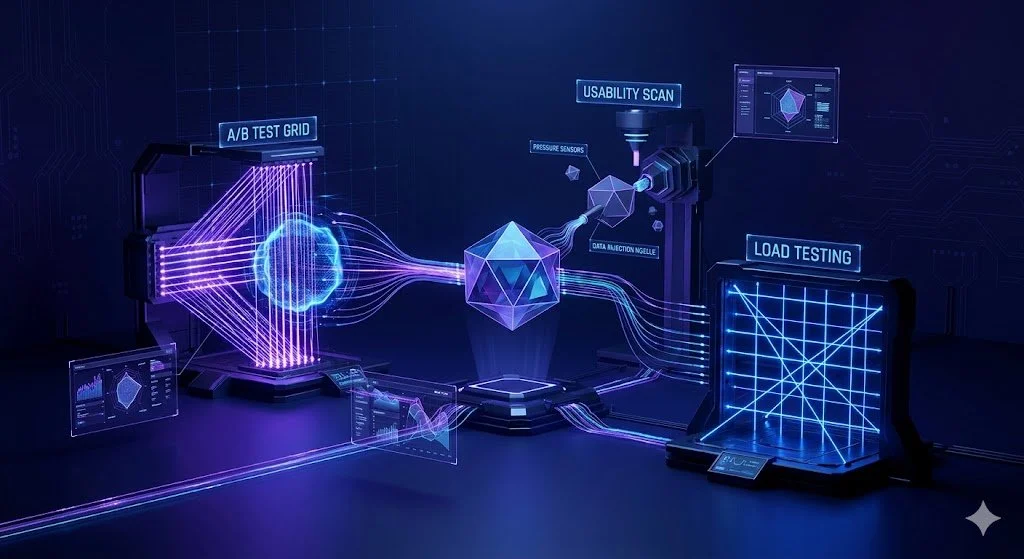
Product-Led Growth isn't just a strategy for acquisition; it is the fundamental engine for lifecycle expansion. Founders who obsess over PLG beyond the initial sale understand a critical truth: your product itself must create and capture new value.