

Venture Capital for Startups: A Practical Guide for SaaS Founders
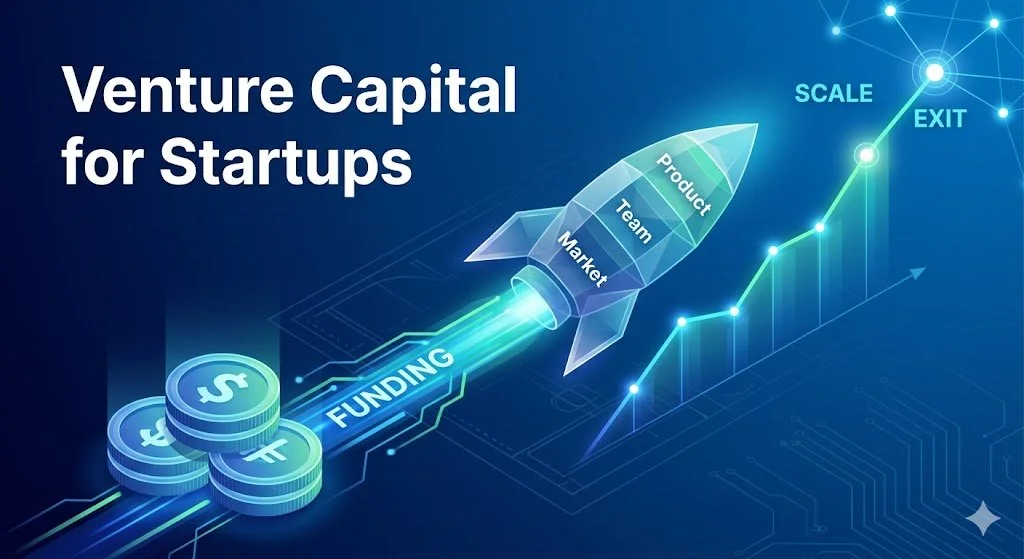
Venture capital for startups is often the fastest route to aggressive growth, but it’s also one of the most misunderstood.
Founders who pursue VC without the right preparation can quickly lose control of their roadmap, burn through runway, or trade long‑term value for short‑term metrics.
This guide gives SaaS entrepreneurs a clear, practical map for when and how to seek venture capital, what investors actually care about, and how to negotiate terms that support sustainable growth.
Why Venture Capital for Startups Matters — And When It Makes Sense
Venture capital isn’t simply money; it’s a specific kind of capital paired with expectations, expertise, and structure. For many SaaS founders, VC is attractive because it provides the resources needed to scale customer acquisition, accelerate product development, and expand into new markets quickly. But it isn’t a universal solution.
Venture capital for startups makes sense when the business:
- Has demonstrated product‑market fit and early traction (e.g., paying customers, recurring revenue growth).
- Requires capital to capture a large market opportunity faster than revenue alone would allow.
- Can achieve much higher long‑term value through rapid scale—typically in markets with network effects, high gross margins, or substantial defensibility.
- Has a team willing to accept outside governance and performance expectations in exchange for growth capital.
If a SaaS startup is still searching for a repeatable sales playbook, struggles with high churn, or has weak unit economics, bootstrapping, incubators, or angel funding may be a better early path. Incubators and growth partners—like CKI inc, which runs an incubator focused on launching SaaS startups and supports scaling SaaS firms with customer success expertise—can help founders improve metrics and positioning before approaching VCs.
How Venture Capital for Startups Works: The Stages and Players
Understanding the stages of venture capital helps founders target the right investors and set realistic expectations.
Common Funding Stages
- Pre‑seed/Seed: Early capital to build an MVP, validate the market, and achieve initial traction. Investors: angels, seed funds, incubators.
- Series A: Capital to scale product, sales, and customer success—often the first institutional round. Investors: VC firms that lead rounds and expect clear metrics like ARR growth and retention benchmarks.
- Series B and Beyond: Growth rounds aimed at scaling operations, international expansion, or strategic acquisitions. Investors: larger VCs, growth equity firms.
- Later‑Stage / Pre‑IPO: Funding to optimize market position, prepare for public markets, or support large M&A moves.
Key Players
- General Partners (GPs): Decision‑makers at VC firms who source, evaluate, and lead investments.
- Limited Partners (LPs): The institutional or individual investors who fund the VC firm.
- Angels and Super Angels: Individuals investing early and often offering mentorship and networks.
- Corporate VCs: Strategic investors from larger companies—can open distribution channels but may have strategic constraints.
What VCs Evaluate: The Five Fundamentals
Venture capitalists look for specific signals that indicate a startup can scale to a large outcome. The familiar list—team, market, product, traction, and unit economics—remains the best framework.
1. Team
VCs invest in people more than ideas. Founders who have complementary skills (product, growth, ops), prior startup experience, or deep domain expertise are more attractive. The team’s ability to hire, lead, and iterate under pressure is critical.
2. Market
Large, growing markets are necessary to justify venture-sized returns. VCs prefer markets with clear expansion paths: adjacent verticals, international opportunities, or product lines that increase customer lifetime value.
3. Product and Differentiation
For SaaS, differentiation can come from superior UX, integrations, data advantages, or network effects. Demonstrable product‑market fit—measured through usage, retention, and customer feedback—helps validate the thesis.
4. Traction
Healthy growth metrics signal momentum. For SaaS startups, VCs typically look at ARR/MRR growth rates, net revenue retention (NRR), churn, customer acquisition costs (CAC), and sales efficiency metrics like Magic Number. Consistent month‑over‑month or quarter‑over‑quarter growth with improving unit economics is compelling.
5. Unit Economics
Investors need confidence that the business can be profitable and scalable. LTV:CAC ratios, gross margins, payback periods, and contribution margins must demonstrate that the model gains efficiency as it scales.
SaaS Metrics That Matter to VCs (And How To Improve Them)
For SaaS founders, a few core metrics can make or break VC interest. Here’s what to track, why it matters, and practical tips to improve each metric.
1. Annual Recurring Revenue (ARR) / Monthly Recurring Revenue (MRR)
ARR/MRR is the top‑line measure of subscription momentum. VCs expect predictable, recurring income streams and often benchmark growth rates by stage.
- Improve it by: optimizing pricing tiers, expanding sales channels, and increasing value‑add features for upsells.
2. Net Revenue Retention (NRR)
NRR captures expansion revenue minus churn and contraction. Many SaaS VCs target >100% NRR—meaning existing customers generate more revenue over time.
- Improve it by: focused customer success, expansion strategies (cross‑sell/up‑sell), and product experiences that increase usage.
3. Gross Margins
High gross margins (often 70%+ for pure SaaS) signal strong unit economics. Lower margins may indicate expensive hosting, support, or onboarding costs.
- Improve by: optimizing cloud spend, automating onboarding, and reducing manual services.
4. Customer Acquisition Cost (CAC) and Payback Period
VCs want efficient, predictable acquisition channels. Shorter payback periods reduce fundraising frequency and improve capital efficiency.
- Improve CAC by: refining ICP (ideal customer profile), improving funnel conversion, and investing in organic channels like content and partnerships.
5. Churn Rate
Churn kills growth. Even small improvements compound dramatically over time.
- Improve churn via: proactive onboarding, in‑product guidance, frequent touchpoints from customer success, and win‑back strategies.
6. Magic Number (Sales Efficiency)
Magic Number evaluates how much ARR is generated per dollar of sales and marketing spend. Lower numbers suggest inefficient growth.
- Improve it by: optimizing pricing, increasing average contract value (ACV), and improving sales process conversion rates.
Preparing for Fundraising: A Practical Checklist
Preparation separates successful raises from chaotic, last‑minute scrambles. Founders should assemble the following before approaching VCs.
- Clean financial model: 3–5 year projections with clear assumptions and scenario analyses (best, base, worst).
- Cap table: Current and post‑raise ownership breakdowns across common and preferred shares; show the dilution impact of the round.
- Fundraising plan: Target amount, use of proceeds, target valuation range, and preferred investor type (strategic vs. institutional).
- Pitch deck: 10–15 slides that tell a compelling story (problem, solution, traction, market, business model, competition, team, ask).
- Data room: Legal docs, financial statements, customer contracts, KPIs, roadmap, and technical architecture docs.
- References: Customer references and previous investors or advisors who can vouch for the team and execution.
CKI inc’s incubator focuses on helping SaaS founders prepare these materials, especially tightening customer success processes and improving early metrics so startups present a stronger case to potential investors.
Pitching VCs: How to Tell a Compelling Story
VC pitches are narrative devices. They must convince investors that the team can capture a large market and convert capital into growth. A clear structure helps:
- Start with a clear problem: Quantify the pain and who experiences it.
- Present the solution: Why is the product unique? Include screenshots or a short demo if possible.
- Show traction: Give numbers—MRR, growth rate, NRR, churn, retention cohorts.
- Explain the business model: Pricing strategy, sales motion (self‑serve vs. enterprise), and distribution plans.
- Address competition: Differentiate credibly without dismissing rivals.
- Introduce the team: Highlight relevant experience and ability to execute.
- Make the ask: How much, at what valuation range (if desired), and how the funds will be used.
Founders should practice concise storytelling—VCs often decide interest within the first few minutes. An effective one‑pager can prime interest before a pitch meeting.
Term Sheets, Valuation, and Common Deal Structures
Understanding the legal and financial mechanics is essential: term sheets aren’t just about valuation; they define governance, control, and future funding behavior.
Common Deal Types
- SAFE (Simple Agreement for Future Equity): Common in seed rounds—converts to equity at a future priced round with a discount and/or cap.
- Convertible Note: Debt that converts to equity at a later round—similar economics to SAFEs but with interest and maturity.
- Priced Round: Investors buy preferred stock at a set valuation; terms include liquidation preferences, anti‑dilution protection, and board seats.
Important Terms to Watch
- Pre‑money and Post‑money Valuation: Determines the percentage ownership sold.
- Liquidation Preference: Ensures investors get their money back before common shareholders on a liquidity event. A 1x non‑participating preference is common; higher or participating prefs favor investors.
- Anti‑Dilution Protection: Full ratchet vs. weighted average—founders should prefer weighted average.
- Board Composition: Who gets board seats matters for control and strategic direction.
- Vesting and Founder Terms: Standard four‑year vesting with a one‑year cliff is common; acceleration clauses can be negotiated.
Founders benefit from experienced legal counsel that specializes in startup financing. Small changes in a term sheet can have large implications later.
Negotiation Strategies: How Founders Can Get a Better Deal
Negotiation is a balance between valuation and control. Some strategic tips founders use to protect upside and maintain flexibility:
- Show alternatives: Even a modest competitive process (two or three interested investors) gives leverage.
- Negotiate for milestones: If investors want protection, propose milestone‑based tranches instead of bigger immediate dilution.
- Prioritize governance terms: Avoid giving away vetoes on hiring, budgets, or future financings unless for a clear strategic reason.
- Use a smaller lead: If the lead investor wants too many control provisions, consider bringing in a co‑lead or consortium to balance terms.
- Protect founder incentives: Ensure equity pools for hiring are accounted for pre‑ or post‑money intentionally to avoid surprise dilution.
What Happens After the Investment?
Receiving venture capital starts a new chapter. Founders should be ready to shift from “build” to “scale” mode and to work closely with investors.
Board Dynamics and Reporting
VCs typically take a board seat and require regular reporting. Founders should prepare crisp monthly/quarterly reports covering KPIs, runway, major wins, hiring, and risks. Transparency builds trust and enables helpful intervention when needed.
Operational Expectations
VCs will push for milestones: growth targets, hiring plans, international expansion, or product roadmap acceleration. Founders should align goals and set realistic KPIs that tie to capital deployment.
Leveraging Investor Value
Beyond money, strategic value from VCs includes introductions to customers, hiring networks, follow‑on capital, and M&A or exit guidance. Good founders actively tap this network.
Alternatives to Venture Capital
VC isn’t always the right path. Alternatives can preserve ownership and control while still enabling growth.
- Bootstrapping: Fund growth from revenue—slower but retains equity and control.
- Angel Funding: Smaller checks and lighter governance early on.
- Revenue‑Based Financing: Repayable by a percentage of revenue—useful for predictable, recurring revenue companies.
- Debt Financing: Bank loans or venture debt—keeps ownership but requires consistent cash flow to service debt.
- Strategic or Corporate Investors: Can provide distribution or partnerships in exchange for equity or convertible instruments.
For many SaaS startups, a hybrid approach works: use incubators and angels to reach key milestones, then target Series A once unit economics and retention metrics are proven. CKI inc’s model—supporting both incubated startups and scaling SaaS customers—aligns with this staged strategy by improving customer success and retention before major capital raises.
Common Pitfalls Founders Should Avoid
Some mistakes are common but avoidable:
- Raising too early: A big check can mask product weaknesses and accelerate costly mistakes.
- Ignoring retention: VCs value sustainable growth—high churn undermines that.
- Signing bad terms: Overly generous liquidation preferences, excessive control rights, or unclear founder vesting can lead to future conflicts.
- Overfocusing on valuation: Getting a high valuation with toxic terms is worse than a fair valuation with supportive investors.
- Underpreparing due diligence: Dirty cap tables, missing contracts, or weak legal documentation can kill deals or reduce valuation.
Real‑World Examples and Practical Tips
Concrete examples help translate theory into action. Consider these scenarios common to SaaS founders:
Scenario 1: Seed Stage—High Churn, Strong Vision
A two‑founder team has an early product and a promising pilot but 8–10% monthly churn. Raising a seed round at that point often leads to wasted capital. Instead, they pursued a three‑month program with an incubator to refine onboarding, introduced a dedicated customer success function, and reduced churn to 2% monthly. With improved NRR and a path to unit economics, they later closed a seed round with better leverage.
Scenario 2: Series A—Tradeoffs Between Speed and Control
A SaaS company with $3M ARR faced a choice: accept a lead investor who offered $8M pre‑money but wanted two board seats and a 2x participating liquidation preference. The founders negotiated for a single board seat, a 1x non‑participating preference, and a milestone‑based tranche, preserving upside and aligning incentives. The tradeoff: slightly slower closing but stronger long‑term alignment.
Practical Tips
- Track cohorts: cohort analysis reveals real retention trends and product improvements faster than raw churn.
- Build a cap table model: show multiple scenarios (next round at X valuation, at Y valuation) so investors understand outcomes.
- Invest in customer success early: small investments in onboarding and success managers often yield outsized gains in NRR.
When a VC Is the Right Partner
The best VC relationships combine capital with aligned incentives and executional support. Founders should seek partners who:
- Understand their market and have relevant portfolio or operational experience.
- Clearly communicate expectations and timelines for growth and follow‑on investment.
- Provide intros to customers, hires, and follow‑on capital sources.
- Are transparent about governance and conflict resolution approaches.
CKI inc’s experience working with scaling SaaS companies highlights the value of choosing investors who appreciate the centrality of customer success. For SaaS, customer retention and experience often determine which companies win over the long run—investors who recognize that will support sensible hiring and product investments instead of pushing purely top‑of‑funnel scaling.
Checklist: Is the Startup Ready to Seek Venture Capital?
A quick readiness checklist founders can use before outreach:
- Consistent MRR growth for at least 6 months
- NRR above 100% (or clear path to it)
- Gross margins that support scale (typically 70%+ for SaaS)
- CAC and payback period within acceptable benchmarks for the stage
- Clean cap table and term sheet preferences prepared
- Founders have a hiring plan and go‑to‑market strategy aligned with funding use
Frequently Asked Questions
What valuation should a SaaS startup expect at each stage?
Valuations vary widely by market, growth rates, and geography. As a rough guide: seed valuations often range from $3M–$10M pre‑money, Series A from $10M–$40M pre‑money (depending on ARR and growth), and Series B/C scale with revenue milestones and growth. Investors prioritize momentum and unit economics over arbitrary multipliers.
How much equity should founders expect to give up in a Series A?
Typical dilution in a Series A is 15%–25% for the new round, though this depends on the raise size and valuation. Founders should plan cumulatively for multiple rounds—post‑Series A dilution often leads to founders holding 40%–60% collectively, depending on prior seed rounds and option pools.
Do VCs always take board seats?
Not always. Seed investors and angels rarely demand board seats, but Series A and later leads often do. Negotiation matters—a board observer seat is a less intrusive alternative if governance control is a concern.
How long does the fundraising process usually take?
From first outreach to signed term sheet, seed rounds can take 4–8 weeks with an active process; Series A rounds often take 8–12 weeks or longer, especially when multiple investors negotiate terms. Due diligence adds additional time.
Should founders accept a lower valuation for a strategic investor?
It depends. Strategic investors can offer distribution, technology partnerships, or customer access that accelerate growth. If those benefits materially increase the startup’s trajectory, accepting a slightly lower valuation can be worthwhile. Founders should quantify expected value from partnerships before deciding.
Conclusion: Treat Venture Capital as a Strategic Tool, Not an End
Venture capital for startups is a powerful accelerator when used with clear intent. For SaaS founders, the key is timing: raise when product‑market fit is proven, unit economics are scaling, and the team is ready to deploy capital effectively. VC funds become true partners when both sides share a vision for growth, understand realistic milestones, and align incentives through fair terms.
Practical preparation—clean financials, strong metrics, a compelling narrative, and the right legal counsel—makes the difference between a deal that propels growth and one that complicates it. For founders who want to improve customer retention and strengthen the metrics VCs care about, programs and partners like CKI inc can provide targeted support through incubation, customer success engineering, and growth advisory services. That kind of prep work often turns uncertain prospects into fundable, high‑momentum startups.
When founders approach venture capital thoughtfully—measuring readiness, understanding terms, and choosing complementary investors—they increase the odds of raising capital that not only funds growth but also multiplies long‑term value.