

SaaS Communication Strategies to Reduce Churn and Organizational Growth
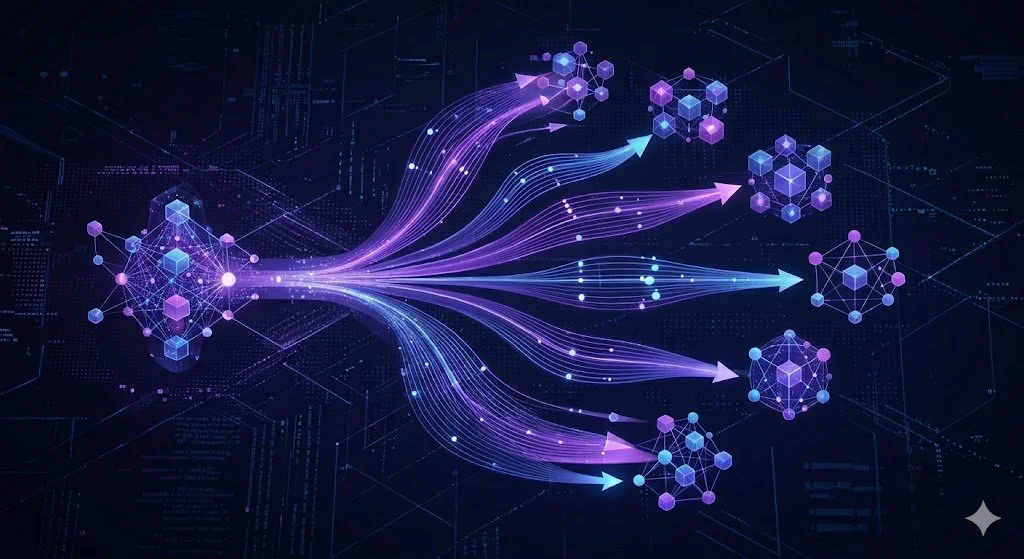
A single onboarding message tailored to a user's first action can lift activation rates by 30%—that’s the power of personalized communication strategies.
For SaaS founders trying to scale fast, personalization isn't a luxury; it's a measurable growth lever that shortens time-to-value, reduces churn, and turns users into advocates.
Why Personalized Communication Strategies Matter for SaaS
SaaS businesses sell ongoing value, not one-off products. That means retention, not just acquisition, determines long-term success. Personalized communication strategies align messaging with where each customer is in their lifecycle, their role, and the exact problems they want solved. The result: happier customers who stick around longer and spend more.
For startups and scaling SaaS companies, personalization helps in three concrete ways:
- Accelerates activation: Relevant onboarding nudges help users experience the “aha” moment fast.
- Reduces churn: Proactive, context-aware outreach fixes issues before they become cancellations.
- Increases expansion: Timely recommendations and upsell offers land better when they're personalized.
Foundations: Data, Segmentation, and Customer Understanding
What Data Matters
Effective personalization starts with the right signals. Not every data point is equally useful. Founders should prioritize:
- Behavioral data: First actions, feature usage, frequency, time-to-first-key-action.
- Account data: Company size, industry, plan, contract value, ARR.
- Profile data: Role, decision-making authority, onboarding contacts.
- Transactional data: Billing events, trial start/end, upgrades/downgrades.
- Feedback data: NPS, support tickets, churn survey responses.
Segmentation That Actually Works
Segmentation should be action-oriented and tied to outcomes. Useful segments for SaaS include:
- New trial users: Days since signup, completed onboarding steps.
- Active power users: High frequency, core feature adoption.
- At-risk accounts: Declining logins, unresolved support issues, downgraded plans.
- Expansion candidates: Users hitting usage limits or with growing teams.
- Churned customers: Cancelled accounts within last 90 days for win-back flows.
Segment names should map to playbooks—each segment gets a specific sequence of messages and interventions tied to KPIs like activation rate, retention, or expansion conversion.
Channels, Timing, and Where Personalization Helps Most
Choosing Channels
Omnichannel personalization performs best when each channel is used for its strengths:
- Email: Great for onboarding sequences, billing, and educational content.
- In-app messages & tooltips: Best for contextual nudges tied to a specific feature.
- Push & SMS: Use sparingly for time-sensitive alerts (session invites, expiring credits).
- Live chat & in-app help: Ideal for real-time problem solving and high-intent users.
- Outbound calls (CS/AM): For high-value accounts or renewal conversations.
Timing Is Personal Too
Timing can be as important as channel. Founders should map touchpoints to the customer journey—trial day 1, milestone achievement, billing events, and signs of decline. Automate timing where possible but allow manual interventions for high-value accounts.
Message Design: What to Personalize and How
Personalization Elements
At its simplest, personalization replaces placeholders: {{first_name}}, {{company}}. But the highest-performing messages go deeper:
- Contextual nudges: “It looks like you’ve started a project. Would you like a walkthrough of X feature?”
- Behavioral triggers: Messages triggered by in-product behaviors (e.g., “You haven’t invited teammates—here’s why shared boards help”).
- Role-based language: Speak to developers differently than to product managers or CFOs.
- Milestone recognition: Celebrate usage milestones (“You’ve created your 50th report—here’s how to automate it”).
- Data-driven recommendations: Suggest features or add-ons based on observed usage patterns.
Examples of Effective Personalized Messages
Short, real examples help founders see how personalization works in practice:
- Onboarding Email (Trial Day 1): “Hi
{{first_name}}— welcome! Your team at{{company}}can connect Slack to get real-time alerts. Want a 5-minute setup guide?” - In-App Tooltip: “Looks like you’re creating your first dashboard. Try the ‘Auto-refresh’ toggle to keep data live.”
- At-Risk Email: “We noticed usage dropped 40% last week. Can the team help troubleshoot, or would switching to weekly digest emails suit better?”
- Upsell Suggestion: “You’re nearing the seat limit on your plan. Upgrading adds 5 seats and priority support—should we prepare a quick quote?”
Automation: Building Workflows and Journeys
Mapping Customer Journeys
Every welcome flow or renewal sequence should start with a simple journey map: entry point, key milestones, trigger points, and exit. That makes it easy to assign messages and owners. A journey for trial users, for example, might include:
- Signup confirmation and activation steps (Day 0–1)
- Guided onboarding and product tours (Day 1–7)
- Feature-focused education based on behavior (Day 7–14)
- Check-in and assessment of success metrics (Day 14–21)
- Expansion or renewal conversation (Day 21+)
Behavioral Triggers and Rules
Define clear, simple rules for automation triggers so messages remain relevant. Examples:
- Trigger an onboarding email when a user completes profile but not their first key action within 48 hours.
- Send an “at-risk” alert to a CSM when weekly active users drop by >30% for an account over $5k ARR.
- Offer a demo to accounts that hit usage ceilings three times in a month.
Personalization Tokens and Dynamic Content
Use tokens and conditional content to tailor messages. Here’s a simple token example common in email templates:
{
  "to": "{{email}}",
  "subject": "Welcome, {{first_name}} — Next Steps for {{company}}",
  "body": "Hi {{first_name}},\n\nSince you work in {{industry}}, many teams find feature X helpful because..."
}
Conditional blocks let the same email serve different personas. For instance, show a technical case study to developers and a ROI-focused metric to founders.
Measurement: KPIs That Prove Personalization Works
Primary Metrics
Founders should track metrics that tie personalization to outcomes:
- Activation rate: Percentage of users who hit the product’s key action in a defined window.
- Time-to-value: Median time until the user experiences meaningful value.
- Retention/Churn: Monthly and cohort retention rates, churn rate by segment.
- Expansion ARR: Upsell and cross-sell revenue attributable to targeted messages.
- Engagement metrics: Open rates, click-through rates, in-app event frequency.
Measuring Lift
Use A/B tests and cohort analysis to measure uplift from personalization. For example, run a test where half of new trials receive a behaviorally-triggered onboarding email and the other half get a generic sequence. Track activation and 30-day retention to attribute impact.
Privacy, Ethics, and Trust
Personalization requires trust. Mishandled data or invasive messages damage reputation faster than they help metrics. Founders must prioritize consent, transparency, and data security:
- Collect only necessary data and explain why it’s useful.
- Offer clear preferences and easy opt-outs for communication channels.
- Comply with regulations (GDPR, CCPA) and document data handling processes.
- Avoid creepy personalization—don’t surface overly specific user activity that feels intrusive.
Trust also means personalization should add real value, not just marketing polish. A personalized message should help the recipient, not just push a sale.
Scaling Personalization Without Breaking the Team
Processes and Playbooks
Scaling personalization means codifying what works. Good playbooks include:
- Segment definitions and priority ranks.
- Message templates with tokens and conditional logic.
- Trigger rules and escalation paths.
- Owner assignments (marketing automation, CSMs, product).
Technology Stack
SaaS founders should assemble a stack that supports data unification and orchestration. Components to consider:
- Data layer/CDP: Centralize customer data (behavioral + profile).
- Marketing Automation: Email + workflows (e.g., Customer.io, Braze, HubSpot).
- In-product messaging: Intercom, Appcues, Pendo.
- Analytics: Mixpanel, Amplitude, Looker for cohort analysis.
- CRM/CS platform: Salesforce, HubSpot, or a lightweight CSM workspace for high-touch accounts.
CKI inc often recommends pairing a CDP with an orchestration layer so personalization rules are consistent across channels—a tactic that reduces duplicated messaging and improves user experience.
Team Roles: Who Owns Personalization?
Personalization sits at the intersection of product, marketing, and customer success. Typical ownership model:
- Product: Defines value milestones and key actions to measure activation.
- Marketing/Lifecycle: Owns campaign design, templates, and email automation.
- Customer Success: Manages high-touch sequences, renewals, and at-risk interventions.
- Data/Analytics: Creates segments, tracks KPIs, and runs experiments.
Cross-functional rituals—weekly personalization review, monthly playbook updates—keep messaging coherent and responsive to product changes.
Implementation Roadmap: A Practical 90-Day Plan
Days 0–30: Foundation
- Audit existing comms and map the customer journey.
- Identify three high-impact segments (e.g., new trials, at-risk accounts, expansion candidates).
- Define 2–3 key activation metrics and instrument events.
- Build basic tokenized templates for email and in-app messages.
Days 31–60: Automate and Experiment
- Deploy onboarding and at-risk flows with behavioral triggers.
- Run A/B tests for subject lines, message cadence, and CTA types.
- Set up dashboards for activation and retention by cohort.
- Train CS and Marketing on playbooks and escalation rules.
Days 61–90: Scale and Optimize
- Expand personalization to more segments and channels.
- Use cohort experiments to quantify lift and iterate on messaging.
- Document playbooks and standardize templates for reuse.
- Plan for broader rollout (internationalization, more channels).
CKI inc’s incubator model helps early-stage SaaS teams accelerate this roadmap by providing a repeatable customer success playbook and hands-on support for instrumentation and lifecycle design.
Common Mistakes and How to Avoid Them
- Overpersonalizing too soon: Start with simple, high-impact signals (signup, first key action) before layering complex logic.
- Fragmented data: Avoid siloed customer data; unify it into a CDP or single source of truth.
- Over-messaging: Personalization must respect frequency—too many messages negate benefits.
- No measurement plan: Personalization without A/B tests and cohort metrics is guesswork.
- One-size-fits-all templates: Create conditional content to address different roles and behaviors within the same segment.
Real-World Examples and Mini Case Study
Example: A SaaS Startup Launching an MVP
A lean team launching a B2B analytics MVP used a tight, behavior-based personalization approach. Rather than trying to personalize across dozens of attributes, they focused on three signals: signup source, first dashboard created, and if the user connected data sources. Their playbook:
- Day 0: Welcome email with a checklist and a link to schedule a 10-minute setup call.
- Day 2 (if no dashboard): In-app tooltip guiding them through dashboard creation.
- Day 7 (if data source not connected): Email with a short video showing the ROI of connected data.
- Day 14 (if active): Prompt with a personalized case study showing similar companies’ outcomes.
Within 60 days, activation rose by 25% and trial-to-paid conversion improved by 18%. The key was targeting the highest-leverage actions and keeping messages concise and useful.
CKI inc Example
CKI inc helps scaling SaaS businesses implement similar strategies but at scale. For a mid-market SaaS client, CKI mapped customer success playbooks to product milestones and automated escalation rules for accounts showing early signs of churn. The outcome: a 15% reduction in churn among accounts over $10k ARR and a 12% increase in net retention over six months. CKI’s approach combined lifecycle messaging, CS interventions, and product nudges designed to accelerate time-to-value.
Practical Templates and Snippets
Email Template: New Trial Welcome
Subject: Welcome, {{first_name}} — Quick Start Checklist for {{company}}Hi {{first_name}},
Welcome to [Product]. Start here to see value fast:
- Complete your profile (2 min)
- Connect one data source
- Create your first dashboard using template “Revenue Overview”
If someone on your team needs help, reply to this email or schedule a 10-min setup call.
— The [Product] Team
In-App Tooltip Copy
“Pro tip: Toggle ‘Auto-refresh’ to see real-time updates. Turn it on to avoid stale reports.”CS Manual Outreach Script for At-Risk Accounts
Hi {{cs_contact}},Noticed a drop in activity for {{company}} over the last two weeks. Are they running into blockers with [feature]? Can I schedule a 20-minute session to review usage and suggest quick wins?
Best, {{cs_name}}
Advanced Tips: Personalization at Enterprise Scale
- Use intent signals: Track account-level intent (web visits, pricing page views) to prioritize outreach for the sales and CS teams.
- Leverage machine learning responsibly: Predictive churn models can surface at-risk accounts, but validate features and avoid black-box decisions without human oversight.
- Orchestrate cross-channel journeys: Ensure a consistent message across email, in-app, and CS outreach—use orchestration tools to avoid overlap.
- Localize and role-target: As products scale internationally, localize content and tailor messages for regional roles and workflows.
Conclusion: Personalization as a Productive Habit, Not a Band-Aid
Personalized communication strategies are not a one-off campaign—they’re a disciplined approach to understanding customers and aligning interactions to their needs. For SaaS founders, effective personalization shortens time-to-value, reduces churn, and unlocks expansion revenue. Start small: instrument key events, build playbooks for a handful of high-impact segments, measure lift, and iterate. As those playbooks mature, scale them with the right tools, processes, and shared ownership across product, marketing, and customer success.
For teams building or scaling a SaaS product, working with partners that blend customer success expertise and growth engineering—like CKI inc—can speed up implementation, reduce mistakes, and create repeatable personalization systems that grow with the business.
Frequently Asked Questions
What is the simplest way to start personalizing communications?
Begin with high-impact events: welcome emails, time-to-first-key-action, and billing notifications. Use tokens (first name, company) and one behavior-based trigger (e.g., no key action within 48 hours) to create targeted messages. Measure activation and retention to validate impact.
How can personalization reduce churn?
Personalization identifies early signals of disengagement (declining logins, fewer key actions) and triggers relevant interventions—educational content, help offers, or direct CS outreach. Addressing friction or unmet expectations early prevents cancellations.
Is personalization privacy-compliant by default?
Not automatically. Compliance requires explicit consent for certain data, documented processing, and clear user preferences. Implement data governance, allow communication preferences, and consult legal counsel for region-specific rules like GDPR or CCPA.
What tools are essential for personalization at a growth-stage SaaS?
At minimum: an analytics platform (Mixpanel/Amplitude), a marketing automation/orchestration tool (Customer.io/Braze), in-app messaging (Intercom/Appcues), and a simple CDP or unified data layer. Integrate these to avoid fragmented customer experiences.
How should startups balance automated personalization with human touch?
Automate scalable, repetitive interactions (onboarding emails, in-app tooltips). Reserve human touch for high-value accounts and complex issues where relationship and customization matter—segmented by ARR or strategic fit. Use automation to flag accounts that need human attention.
Get A Free 30-Minute Strategy Session
Fill out the questionnaire to receive a personalized growth plan based on your current stage, from startup to enterprise, through a free consulting session with one of our executives.
Get Started ➜Related Articles

7 Extremely powerful & free marketing tools: designed to grow your business, fast. Uncover the secrets of leveraging powerful free resources for maximum advertising and customer reach.