

SaaS Customer Expectations: What Founders Need to Deliver to Win and Retain Users
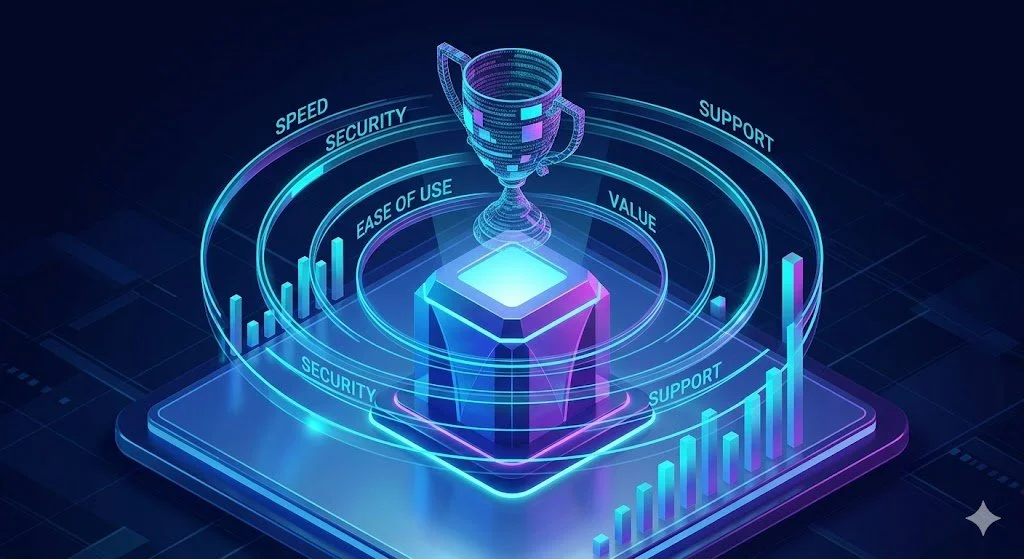
A SaaS customer today expects more than a working app.
They expect fast time-to-value, flawless reliability, transparent pricing, personalized experiences, and proactive support — often before they're willing to pay.
Understanding these saas customer expectations and building systems to meet them separates startups that stall from those that scale.
Why SaaS Customer Expectations Matter for Founders
Founders often focus first on product-market fit and user growth, which is essential. But neglecting what customers expect after the signup — onboarding, support, reliability, measurable ROI — directly impacts churn, expansion revenue, and brand reputation. A single friction point in onboarding or an unresolved support ticket can reduce lifetime value (LTV) dramatically. Meeting and exceeding expectations increases retention, shortens sales cycles through referrals, and improves unit economics.
Some quick realities that make these expectations business-critical:
- Retention drives growth: A 5% improvement in retention can increase company valuation significantly, since subscription models compound revenue over time.
- Acquisition is expensive: CAC rarely falls quickly; retaining customers is the cheapest path to profitable growth.
- Reputation is visible: Reviews, case studies, and social proof amplify both wins and failures.
What Modern SaaS Customers Actually Expect
Customers no longer accept “good enough.” Their expectations are shaped by consumer experiences with fast, reliable services. Below are the core expectations every SaaS founder must prioritize.
Performance and Reliability
Downtime, slow loading, and flaky features erode trust fast. Customers expect 99.9%+ uptime and transparent, real-time status reporting when problems occur.
- Key signals: uptime, mean time to recovery (MTTR), latency.
- Best practice: publish a public status page and incident postmortems for major outages.
Fast, Frictionless Onboarding and Time-to-Value
Customers want to realize value quickly. Onboarding that leads users to an "aha" moment within days (sometimes minutes) reduces churn dramatically.
- Key signals: activation rate, time-to-first-successful-task, onboarding completion %.
- Best practice: craft milestone-based onboarding with templates, in-app guides, and targeted content for each persona.
Clear, Fair Pricing and Predictable Value
Pricing must be transparent, aligned with value, and predictable. Surprise bills or ambiguous feature gating create friction and churn.
- Key signals: pricing page visits, conversion by plan, downgrade/upgrade patterns.
- Best practice: use value-based or usage-based pricing for scalable alignment with customer growth.
Responsive, Multichannel Support
Customers expect options — self-serve documentation, chat, email, phone — and quick, empathetic responses. The channel depends on the customer's stage and spend.
- Key signals: first response time, resolution time, CSAT.
- Best practice: tiered support (self-serve, chatbots + human, priority SLAs) mapped to customer segments.
Continuous Product Improvement and Roadmap Transparency
Customers expect a product that evolves based on feedback. They value clear roadmaps and realistic timelines for features that solve real pain points.
- Key signals: feature adoption rates, product feedback submission rates, NPS drivers.
- Best practice: publish a committed roadmap and engage users in beta programs for early input.
Data Privacy and Security
Security and compliance are non-negotiable. Customers expect clear documentation on data handling, SOC2/GDPR compliance where applicable, and prompt security communications.
- Key signals: security questionnaire completion time, RFP wins/losses tied to compliance, audit readiness.
- Best practice: invest early in baseline security (encryption at rest/in transit, access controls) and communicate certifications.
Seamless Integrations and APIs
SaaS products rarely stand alone. Customers expect first-class integrations and a clean API to slot the product into their workflows.
- Key signals: integration usage, API request volume, feature requests for integrations.
- Best practice: prioritize integrations based on customer workflows and offer pre-built connectors for common platforms.
Personalization and Contextual UX
Customers want the product to feel tailored: contextual onboarding, recommended setups, and user experiences that reflect their industry and role.
- Key signals: activation by persona, feature usage by segment.
- Best practice: use in-product personalization and dynamic onboarding flows derived from initial profile data.
Transparent Service-Level Agreements (SLAs)
Especially for higher-tier customers, clear SLAs (uptime, support response times, credit policies) set expectations and reduce disputes.
- Key signals: SLA breach incidents, renewal objections tied to reliability.
- Best practice: publish SLAs for paid plans and keep them enforceable with clear metrics.
How Expectations Evolve Across Startup Stages
Founders have limited resources early on. The right focus depends on stage: Launch / MVP, Early Growth, or Scaling. Meeting expectations is a staged investment, not a one-time build.
Launch / MVP
Primary goal: validate core value and ensure early users reach the "aha" moment quickly.
- Focus: onboarding, core reliability, basic analytics, simple transparent pricing.
- Minimal requirements: an onboarding checklist, a searchable knowledge base, and basic product telemetry.
Early Growth
Primary goal: improve retention and start structured customer success practices.
- Focus: segmentation, automated onboarding flows, proactive outreach to at-risk customers.
- Invest in: in-app messaging, NPS surveys, and initial CSM playbooks for high-value accounts.
Scaling
Primary goal: optimize for efficiency and expansion revenue while maintaining service quality.
- Focus: customer success operations, churn prediction models, enterprise-grade security and SLAs, advanced analytics.
- Invest in: dedicated CSM teams, integration marketplace, and platform reliability engineering.
Building Systems to Consistently Meet Expectations
Delivering on expectations requires repeatable systems: product, support, operations, and data. Below are practical systems and tactical steps founders can implement.
Design Product and UX for First Success
Map the user's journey from signup to core outcome and design for the shortest possible path to the “aha” moment.
- Define the single most important action that correlates with retention for each persona.
- Remove friction around that action: reduce form fields, provide presets, add helpful defaults.
- Use in-app tooltips and checklists that adapt to user progress.
Create Predictable, Milestone-Based Onboarding
Milestones make progress visible and build momentum. For example, a three-step onboarding for a marketing analytics tool might be: connect data sources, configure a dashboard, and send first report.
- Automate reminders and celebrate milestones with microcopy and in-app notifications.
- Provide live or on-demand onboarding sessions for high-value accounts.
Implement a Tiered Customer Success Strategy
Not every customer needs a dedicated CSM. Segment accounts by MRR, growth potential, and risk to decide the level of human touch.
- High-touch: dedicated CSMs, quarterly business reviews, custom onboarding.
- Tech-touch: automated journeys, in-app education, triggered outreach.
- Low-touch: community forums, knowledge base, email drip campaigns.
CKI Inc. often advises scaling SaaS to map CSM coverage to a customer health model that includes product usage, payment history, and support signals — ensuring resources are used where they move the needle on retention and expansion.
Build a Proactive Support Stack
Proactive support nips frustration in the bud. Combine a searchable knowledge base, a robust in-app help widget, chat, and clear escalation paths.
- Automate common answers via chatbots, but route complex cases to human reps quickly.
- Track and publish KPIs like first response time and resolution time, and set internal SLAs.
Close the Feedback Loop Between Product and Customers
Feedback is only useful when it informs the roadmap. Capture qualitative and quantitative feedback and prioritize based on impact and effort.
- Use NPS and CSAT to measure sentiment, and follow up with interviews for context.
- Track feature requests and usage to avoid shipping features that nobody adopts.
- Run betas with power users to validate assumptions before full rollout.
Use Data to Predict and Prevent Churn
Analytics systems should produce a customer health score that flags churn risk early.
- Signals include declining login frequency, falling usage of key features, support ticket spikes, and billing issues.
- Action: automate targeted outreach, offer tailored training, or propose downgrades rather than cancellations.
Make Security a Feature, Not a Footnote
Security investments pay off in trust and in sales cycles with enterprise customers. Even early-stage startups benefit from baseline best practices.
- Publish a security page describing encryption, backups, and certifications.
- Prepare concise answers for security questionnaires and an SOC2 roadmap as the business grows.
Adopt a Clear Integration Strategy
Decide which integrations will be native, which will be partners, and which will be delivered via API. Prioritize connectors that remove adoption friction.
- Start with a shortlist of top integrations for core workflows and expand based on demand.
- Maintain an API that’s simple to onboard with clear docs and SDKs.
Examples and Practical Tactics Founders Can Use Today
These are small, practical steps that produce outsized results if implemented consistently.
Example 1: Reduce Onboarding Time by 50%
Problem: Customers took five days on average to perform the first key action.
Fixes implemented:
- Pre-populated setup using sample data.
- One-click templates for common workflows.
- 30-minute live onboarding sessions offered during trial.
Outcome: Time-to-value dropped to two days, trial-to-paid conversions rose 18%.
Example 2: Cut Churn for Midmarket by Building a Health Score
Problem: Midmarket customers churned unpredictably.
Fixes implemented:
- Built a health score using login frequency, feature use, and support tickets.
- Automated alerts to CSMs for accounts below threshold.
- Quarterly business reviews for at-risk accounts.
Outcome: Churn decreased by 22% over six months, and upsells increased as re-engaged customers broadened usage.
CKI Inc. regularly partners with scaling SaaS teams to implement these kinds of programs — combining product changes with customer success playbooks to reduce churn and improve retention metrics.
Common Mistakes Founders Make (And How to Avoid Them)
1. Treating Onboarding as Documentation
Documentation is necessary, but onboarding must be active and guided. An interactive checklist or live walkthrough converts better than a long help article.
2. Overcomplicating Pricing
Complex pricing confuses buyers and makes comparisons with competitors difficult. Start simple: offer a clear value ladder and optional add-ons.
3. Waiting Too Long to Invest in Customer Success
Some founders delay CS hires until ARR is high, missing early opportunities to reduce churn. Even a single experienced CSM can create scalable processes that pay for themselves.
4. Ignoring Product Analytics
Without user-level analytics, founders can’t see who’s at risk or what features drive retention. Instrumentation is cheap compared to the cost of customer churn.
5. Not Setting Expectations Publicly
When performance, SLAs, or roadmaps are ambiguous, customers assume the worst. Public pages for status, pricing, and security reduce support questions and build trust.
A Practical SaaS Customer Expectations Checklist for Founders
- Map the “aha” moment for each persona and reduce time-to-value.
- Implement milestone-based onboarding with clear success metrics.
- Set up basic telemetry to monitor product usage and health.
- Create a public status page and publish incident postmortems.
- Segment customers for appropriate touch levels (low/tech/high).
- Establish SLAs for paid plans and publish a security/compliance page.
- Choose 3 priority integrations and invest in them.
- Run an NPS program and follow up with detractors for actionable feedback.
- Design pricing that aligns with value and keeps upgrades obvious.
- Automate alerts for churn signals and assign playbooks to respond.
How CKI Inc. Helps Founders Meet SaaS Customer Expectations
CKI Inc. works with two main client types: founders launching SaaS startups in its incubator and scaling SaaS businesses in North America. Combining practical startup experience with customer success expertise, CKI helps teams build the systems above quickly and measurably.
Typical engagements look like this:
- Incubator support: rapid MVP planning with a focus on a validated onboarding path, basic telemetry, and early-stage pricing experiments.
- Scaling programs: designing customer success ops, creating churn prediction models, implementing targeted CSM playbooks, and operationalizing enterprise-grade security and SLAs.
For founders who are resource-constrained, CKI often recommends quick wins like a one-page onboarding checklist, a single integration that unlocks broad adoption, and an initial health-score model to prioritize human touch. These interventions are deliberately high-impact and low-friction.
Future Trends in SaaS Customer Expectations
SaaS customer expectations will continue to evolve quickly. Founders should keep an eye on these trends:
- AI-driven personalization: Customers will expect workflows and recommendations that adapt in real time.
- Proactive issue detection: Systems that fix problems or notify customers before they notice will become table stakes.
- Embedded experiences: Smaller, specialized apps will be embedded directly into larger platforms, changing how integrations are built.
- Privacy-first UX: Customers will favor vendors that make privacy transparent and give them control.
- Flexible monetization: Hybrid pricing — subscription + usage + outcomes — will increase as customers want better alignment with value.
Conclusion: Prioritize Expectations Early and Iterate
SaaS customer expectations are multi-dimensional: product reliability, fast time-to-value, transparent pricing, responsive support, and data security top the list. Founders who intentionally design for these expectations — starting at the MVP stage and scaling systems as the business grows — will see better retention, higher expansion revenue, and shorter acquisition payback periods.
Small, well-targeted investments in onboarding, analytics, and customer success often yield the best early returns. For teams looking for guidance, a partner like CKI Inc. can map a prioritized plan, implement quick wins, and build repeatable processes that reduce churn and accelerate sustainable growth.
Frequently Asked Questions
What are the top three saas customer expectations that impact churn the most?
The three that most directly affect churn are reliable product performance (uptime and speed), quick time-to-value via effective onboarding, and responsive support. If any of these fail consistently, retention suffers.
How should a founder prioritize customer expectations while building an MVP?
Prioritize what gets customers to the “aha” moment fastest. Ensure the core workflow is reliable, build a simple guided onboarding, and instrument basic analytics to measure activation and retention. Defer non-essential integrations and advanced SLAs until product-market fit is confirmed.
When should a startup hire its first Customer Success Manager (CSM)?
Hire a CSM when the startup has a predictable cohort of customers with enough revenue or growth potential that human touch can increase expansion or reduce churn. Many startups benefit from hiring a CSM once ARR reaches a point where each churned account materially affects unit economics.
How does pricing influence customer expectations?
Pricing sets expectations about service level and value. Higher-priced tiers justify faster support, SLAs, and more hands-on onboarding. Transparent, value-based pricing reduces billing disputes and aligns customer perception with delivered outcomes.
What are low-cost ways to meet saas customer expectations early on?
Start with a strong knowledge base, milestone-based onboarding checklists, automated in-app guidance, and a clear status/security page. Implement basic usage analytics and an NPS survey to start collecting actionable feedback — these are high-impact and relatively low-cost steps.
Get A Free 30-Minute Strategy Session
Fill out the questionnaire to receive a personalized growth plan based on your current stage, from startup to enterprise, through a free consulting session with one of our executives.
Get Started ➜Related Articles

7 Extremely powerful & free marketing tools: designed to grow your business, fast. Uncover the secrets of leveraging powerful free resources for maximum advertising and customer reach.