

MVP Launch Best Practices: A 5-Step Guide for SaaS Founders
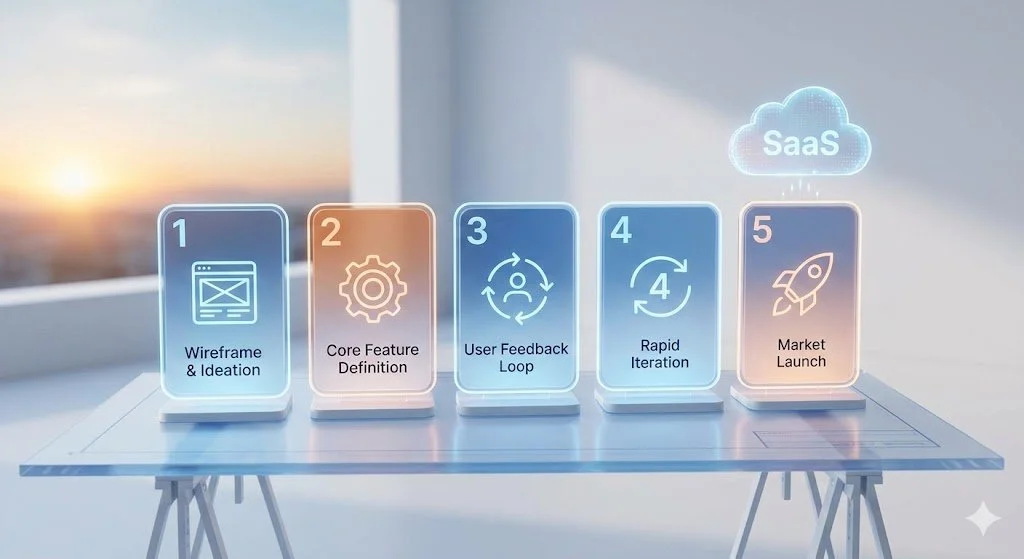
MVP launch best practices help founders validate ideas quickly, conserve resources, and learn fast.
Many SaaS teams waste months building features nobody needs; an effective minimum viable product (MVP) launch reverses that by centering experiments, customers, and measurable outcomes.
This guide walks founders through a practical, battle-tested approach to launching an MVP, with concrete tactics, metrics to track, common pitfalls to avoid, and real-world examples relevant to SaaS startups and incubators like CKI inc.
What Is an MVP and Why It Matters
An MVP is the smallest set of features that allows a team to validate a product idea and learn about customers with the least effort. It’s not a low-quality product; it’s a focused experiment designed to answer the riskiest assumptions: Do users want this? Will they pay? Which user actions predict retention?
For SaaS founders, the goal of an MVP launch is to surface real usage patterns, not vanity metrics. A properly run MVP reduces time to insight, lowers development cost, and improves the chance of product-market fit. Successful MVPs turn uncertainty into data and qualitative feedback that guide further investment.
Pre-Launch: Setting the Foundation
1. Validate the Problem Before Building
Founders should begin by validating the problem. That means talking to potential customers, not building wireframes. Early validation techniques include:
- Customer interviews: 30–60 minutes with 10–20 target users to understand workflows, pain points, and willingness to pay.
- Surveys: Short, targeted surveys to quantify pain severity and market size.
- Landing page tests: Describe the product and capture emails to test demand.
- Concierge or manual demos: Offer manual solutions to mimic the product and observe user behavior.
These steps keep founders honest about whether the problem is pressing enough to build a product for.
2. Define Clear Hypotheses and Success Metrics
Every MVP needs clear hypotheses and definition of success. Examples of hypotheses:
- "Small B2B marketing teams will pay $49/month for automated campaign reporting."
- "Users who complete the onboarding checklist will have 3x higher 30-day retention."
Map each hypothesis to measurable outcomes—activation rate, conversion rate, retention at day 7/30, NPS. These become the yardstick to decide whether to iterate, pivot, or scale.
3. Prioritize Ruthlessly
Founders must prioritize what goes into the MVP. Practical frameworks include:
- RICE (Reach, Impact, Confidence, Effort) — for scoring features quantitatively.
- MoSCoW (Must, Should, Could, Won't) — to set scope boundaries.
- Jobs-to-be-Done — focus on the core job the user hires the product to do.
Only include features that directly validate the core hypothesis. Nice-to-haves get cut.
4. Plan Experiments and the Feedback Loop
Design experiments that produce clear yes/no answers. An experiment plan should include:
- Hypothesis and expected result
- Key metrics and acceptable variance
- Sample size and duration
- Qualitative signals to collect (user quotes, session recordings)
Set rapid cadences—weekly or biweekly—to review data, synthesis feedback, and decide next actions.
5. Assemble the Right Team
For an MVP, a small cross-functional team works best: a product lead, an engineer (or two), a designer, and someone handling customer development/marketing. Makers should sit near feedback sources so they can iterate quickly. If founders lack expertise, accelerators or incubators—like CKI inc’s incubator can supply mentorship, customer success playbooks, and talent to shorten the learning curve.
Build Phase: Lean Development and Product Decisions
1. Keep the Scope Minimal but High Quality
The MVP must be minimal in scope but polished in the areas users interact with most. Founders should ensure:
- Core workflows are bug-free and intuitive.
- Onboarding is clear and leads users to the "Aha!" moment quickly.
- Basic security and privacy expectations are met (especially for B2B SaaS).
Perceived quality matters. A tiny product that's unreliable will kill trust and skew feedback.
2. Favor Iterations Over Perfection
Use short development sprints and ship incrementally. Each release should unlock new learning. Timeline examples:
- Week 1–2: Basic prototype and landing page test
- Week 3–6: MVP build focusing on core flow
- Week 7–12: Measure, iterate, and release improvements
3. Use No-Code and Composable Platforms Where It Makes Sense
No-code tools can accelerate testing. For early-stage SaaS, founders often combine:
- Webflow or Carrd for landing pages
- Bubble or Adalo for simple product logic
- Zapier/Make for automations
- Stripe for payments
Choose a stack that supports quick changes—speed to insight matters more than architectural purity at this stage.
4. Instrument Analytics From Day One
Monitoring user behavior is non-negotiable. Basic instrumentation should include:
- Event tracking for signups, onboarding steps, feature usage
- Funnels for activation and conversion
- Cohort analysis for retention
Tools like Mixpanel, Amplitude, or PostHog make it easier to move from anecdote to evidence. Start with a short event taxonomy and expand as needed.
5. Ship with Feature Flags and Telemetry
Feature flags allow shipping experiments to subsets of users and rolling back quickly. Telemetry and error reporting (Sentry, LogRocket) help catch real-world issues fast. This reduces risk and supports A/B testing without heavy deployments.
Go-To-Market Strategy for MVP Launch
1. Target the Right Early Adopters
Early adopters are not average users. They're usually more forgiving, eager to engage, and motivated to influence product direction. Find them in niches where the pain is sharp and the decision-making process is short:
- Vertical-specific communities and Slack groups
- Product hunt, Indie Hackers, and relevant subreddits
- Existing networks, beta customers, or pilot partners
Recruiting the right early adopters transforms the product validation process into a partnership rather than a test.
2. Keep Pricing Simple and Experiment
Pricing is a hypothesis. For MVPs, founders should:
- Test a few price points with pilot customers instead of guessing.
- Offer short-term discounts or pilot pricing with clear renewal terms.
- Prefer simple, value-based pricing that aligns with the core job the product solves.
Charge something. Free trials are useful, but even a small price validates willingness to pay and changes user behavior toward commitment.
3. Nail the Onboarding and Activation Flow
Onboarding is the front door to retention. Effective onboarding includes:
- A clear, single-objective first task that delivers the "Aha!" moment
- Guided tours, checklists, and context-sensitive help
- Personalized onboarding for high-value pilot customers
Measure activation (e.g., first meaningful action completed) and iterate until activation correlates strongly with long-term retention.
4. Combine Inbound and Direct Outreach
Inbound content (blog posts, case studies, tutorials) builds credibility. But early traction often comes from direct outreach and partnerships. Founders should:
- Run targeted outreach to potential pilot customers
- Leverage integrations and partner channels
- Use product-focused communities to seed feedback
5. Provide Hands-On Support and Listen
In the MVP stage, customer support is a discovery tool. Offer hands-on support: walkthroughs, weekly check-ins, and quick response times. Track feedback and convert conversations into product improvements. This is where a customer success-oriented company like CKI inc adds value—helping startups build repeatable onboarding and retention playbooks that reduce churn later.
Measuring Success: Metrics to Track After Launch
A well-run MVP tracks both quantitative and qualitative signals. Key metrics include:
- Activation rate: Percentage of users who reach the product’s meaningful first outcome.
- Retention (D1, D7, D30): How many users return after initial use.
- Churn rate: For paid customers, the percentage that cancels over time.
- Conversion rate: From signup to paid account.
- Engagement metrics: Feature usage frequency, time in product, key events per user.
- LTV and CAC: Lifetime value versus customer acquisition cost—early indicators of business viability.
Cohort analysis is critical. It reveals whether recent changes improved retention for users who experienced those changes. Founders should avoid equating signups with success; retention and revenue are the true signals.
Common Pitfalls and How to Avoid Them
Pitfall: Overbuilding
Building everything at once delays learning and wastes resources. The remedy: cut scope and focus on the smallest experiment that validates the core hypothesis.
Pitfall: Listening Only to Vocal Users
Some feedback is louder but not representative. Combine qualitative interviews with behavioral data. Give weight to frequent patterns observed across cohorts.
Pitfall: Relying on Vanity Metrics
High signup numbers can mask poor retention. Track meaningful funnel metrics—activation, retention, and revenue per cohort—rather than raw registrations or pageviews.
Pitfall: Slow Feedback Loops
Long cycles prevent learning. Shorten the loop by shipping small changes, instrumenting them, and scheduling regular review cadences.
Pitfall: Ignoring Customer Success
Many SaaS teams treat customer success as later-stage. The opposite works better: integrating customer success early reduces churn, surfaces product improvements, and builds advocates. CKI inc emphasizes customer success from day one—founders who embed proactive onboarding and support see higher retention and stronger case studies for growth.
Case Studies and Practical Examples
Example 1: A Marketing Automation MVP That Grew Through Onboarding
A small team built an MVP for automated marketing reports. They shipped a simple dashboard with CSV imports and email scheduling. Early metrics showed signups but low activation. Through qualitative interviews, they discovered users didn’t know how to map their CRM fields—so the team added an onboarding wizard that pre-mapped fields using common CRM templates.
Result: Activation rose from 12% to 45% in two weeks and retention improved significantly. The lesson: instrumented data pointed to a problem; qualitative feedback revealed the fix, and a quick product change produced measurable improvement.
Example 2: Pricing Validation in an Incubator Environment
A SaaS startup in an incubator cohort used CKI inc’s growth advisors to test pricing. They offered three pilot customers a discounted pilot at $29/month and three others a $79/month pilot. The high-price group reported better perceived value and stuck around longer. The team validated that the higher price aligned with the value delivered and chose a value-based pricing model. They also built a freemium-to-paid funnel to expand adoption while preserving higher-paying tiers for power users.
Result: Higher initial ARPU and clearer segmentation for marketing and sales.
Example 3: A No-Code Prototype That Proved Demand
An early-stage founder tested a scheduling app by building a no-code prototype and manually triggering backend tasks. They promoted the landing page in niche communities and booked paid pilots with two paying customers in three weeks. That revenue funded the first engineering sprint, and early users participated in weekly feedback sessions that shaped the product roadmap.
Result: Short runway to paying users, reduced risk, and a product that actually solved the pilot customers' problems.
Practical Checklist: MVP Launch Best Practices
- Define the problem and 3–5 primary user personas.
- Formulate 2–4 clear hypotheses with measurable outcomes.
- Create a minimal feature set focused on the core job-to-be-done.
- Plan experiments with timelines, sample sizes, and decision rules.
- Instrument key events and set up funnels/cohort tracking.
- Recruit early adopters from targeted communities or pilot partners.
- Charge for the product (even a small amount) to test willingness to pay.
- Offer hands-on onboarding and proactive customer support.
- Run short development sprints and ship incremental changes.
- Review metrics and qualitative feedback weekly and iterate rapidly.
- Avoid scope creep; document learnings and pivot only on data.
Tools and Resources That Speed Up an MVP Launch
A smart toolset helps founders move faster without rebuilding everything from scratch. Commonly used categories and examples:
- Analytics & Experimentation: Mixpanel, Amplitude, PostHog, Google Analytics
- Product Observability: FullStory, Hotjar, Sentry
- Feature Flags / Rollouts: LaunchDarkly, Flagsmith
- Payments & Billing: Stripe, Chargebee, Baremetrics
- No-Code / Rapid Prototyping: Bubble, Webflow, Figma for design
- Automation: Zapier, Make (Integromat)
- Customer Communication: Intercom, Drift, Help Scout
- Project Management: Notion, Trello, Jira
Choose tools that align with the team’s technical skills and that allow easy export of data for deeper analysis later.
Scaling Beyond MVP: When and How to Grow
Once the MVP validates core hypotheses—sustained retention, predictable conversion, and willingness to pay—the startup moves from validating to scaling. Key considerations for that phase:
- Invest in Architecture: Re-architect for reliability and performance when usage patterns justify it.
- Build Sales and Customer Success Operations: Transition from founder-led onboarding to a repeatable onboarding playbook and scale customer success to reduce churn.
- Refine Pricing and Packaging: Use value metrics and segmentation to optimize ARR and LTV.
- Expand Go-to-Market Channels: Double down on channels that produced the best CAC:LTV ratio.
- Measure Unit Economics: Ensure CAC is justified by LTV and that payback periods meet growth goals.
Founders often underestimate the role of customer success after product-market fit. CKI inc counsels SaaS companies to build customer success playbooks early—standardizing onboarding, health scoring, and expansion tactics to make growth predictable.
Frequently Asked Questions
What’s the difference between an MVP and a prototype?
A prototype demonstrates ideas or flows and may not support production use, while an MVP is a production-ready product with the minimal feature set required to test core business hypotheses. Prototypes help validate flows; MVPs validate market demand and willingness to pay.
How long should an MVP take to launch?
That depends on complexity, but many SaaS MVPs launch in 6–12 weeks when founders prioritize ruthlessly and use rapid stacks or no-code tools. The focus should be on learning quickly rather than hitting a calendar date.
Should an MVP be paid or free?
Charging—even a small amount—provides a stronger signal about product value and user commitment. Free trials or freemium models are valid but should still be treated as pricing experiments with clear conversion goals.
How many users are needed to validate retention?
Quality beats quantity. For early validation, cohorts of 30–100 engaged users can reveal patterns. The important part is consistent behavior over time and clear differences between experimental groups when changes are made.
When should a founder pivot versus iterate?
Iterate when experiments move metrics in the right direction or reveal actionable fixes (onboarding, pricing, messaging). Pivot when the core hypotheses—market need, willingness to pay, or scalability—fail repeatedly despite substantial iterations and learning.
Conclusion
MVP launch best practices center on disciplined experimentation, relentless customer focus, and rapid learning. For SaaS founders, the smartest bets are those that validate demand, measure retention, and reveal whether customers will pay for the value delivered. Practical steps—narrow scope, clear hypotheses, instrumentation, hands-on customer success, and short feedback cycles—turn uncertainty into decisions.
CKI inc helps SaaS startups at both ends of the spectrum: scaling companies aiming to reduce churn and incubator-stage startups launching MVPs. Their emphasis on customer success, pricing experiments, and growth playbooks demonstrates how combining product rigor with a customer-first approach accelerates sustainable growth. Founders who follow MVP launch best practices and invest early in customer success tend to build products that stick—and businesses that scale.
For teams preparing an MVP, a good next step is to write two hypotheses, define the activation event that predicts retention, and recruit five–ten early users for a hands-on pilot. Those actions will produce the first set of data that directs the next sprint—and might be the difference between guessing and building something customers actually want.